Cart
0
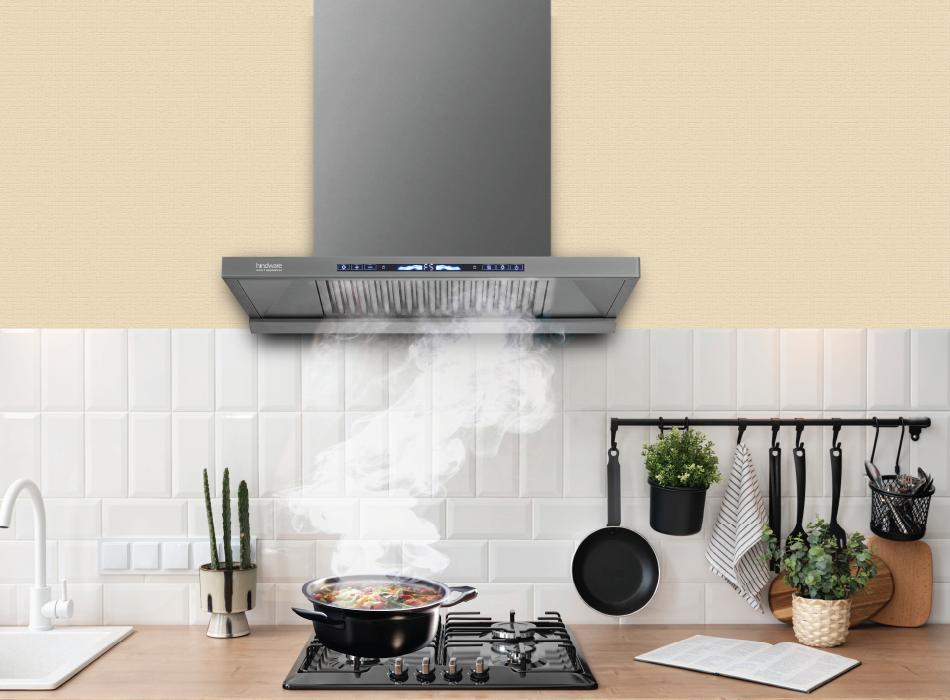
A kitchen chimney is an important appliance for modern kitchens, especially in Indian homes where everyday cooking often involves frying, grilling, tadka and strong spices. It helps capture cooking smoke, grease and odours, making the kitchen more comfortable.
However, choosing the right kitchen chimney requires more than selecting an attractive design. You need to consider its size, suction capacity, filter type, installation requirements and maintenance.
This kitchen chimney buying guide will help you understand the important features and choose a model that suits your kitchen layout and cooking habits.
1. Choose the Right Chimney Size
The size of your kitchen chimney should match your cooking hob or gas stove. A chimney that is too small may not effectively capture smoke and fumes from all burners.
Common chimney widths include:
| Chimney Width | Suitable For |
|---|---|
| 60 cm | Many 2–4 burner cooktops |
| 90 cm | Wider cooktops and many 3–5 burner setups |
These are general guidelines. Always check the actual dimensions of your cooktop and chimney before purchasing.
How to Measure Your Kitchen Chimney Space
Before selecting a chimney:
-
Measure the width of your gas stove or cooktop.
-
Check the available wall or cabinet space.
-
Measure the height between the cooktop and chimney installation point.
-
Check whether the chimney duct can reach an external outlet.
-
Make sure nearby cabinets and shelves do not obstruct installation.
A chimney should generally be at least as wide as the cooktop. Follow the manufacturer's recommended installation height for your specific model.
2. Understand Chimney Suction Capacity
Suction capacity refers to the volume of air a chimney can move in a given amount of time. It is commonly measured in cubic metres per hour (m³/hr).
The right suction capacity depends on your kitchen size, cooking frequency, ventilation and cooking style.
What Suction Capacity Should You Choose?
-
Light cooking: A lower-capacity model may be sufficient for occasional cooking.
-
Regular Indian cooking: Consider a model designed to handle frequent cooking, frying and tadka.
-
Heavy cooking: A higher-capacity model may be suitable for frequent frying, grilling and intensive cooking.
Do not choose a chimney based only on the highest suction number. Also consider noise levels, duct design, installation quality and the manufacturer's recommendations.
3. Know the Different Types of Kitchen Chimney Filters
The filter is responsible for capturing grease and other particles from cooking fumes. Different chimney models use different filter systems.
Baffle Filter
Baffle filters are commonly used in Indian kitchens. Their design helps separate grease from the airflow.
Advantages:
-
Suitable for regular Indian cooking
-
Designed to handle oily cooking fumes
-
Usually washable and reusable
-
Requires periodic cleaning
Mesh Filter
Mesh filters use layers of fine metal mesh to capture grease particles.
Advantages:
-
Simple filter design
-
Available in various chimney models
-
Can be removed for cleaning
Things to consider:
-
Grease can accumulate over time
-
Requires regular maintenance
-
Cleaning frequency depends on cooking habits
Filterless Chimney
Filterless chimneys use specially designed airflow systems to separate grease without a conventional removable filter.
Advantages:
-
No traditional filter to wash
-
Convenient maintenance in compatible models
-
Designed to reduce grease accumulation inside certain components
Always check the manufacturer's cleaning and maintenance instructions before choosing a filterless model.
4. Ducted vs Ductless Kitchen Chimney
One important decision is whether to choose a ducted or ductless chimney.
Ducted Chimney
A ducted chimney draws cooking fumes through a pipe and releases them outside the home.
Advantages:
-
Removes cooking fumes from the kitchen
-
Suitable for frequent and heavy cooking
-
Can be effective when properly installed
Things to consider:
-
Requires an external outlet
-
Duct length and bends can affect performance
-
Installation needs proper planning
Ductless Chimney
A ductless chimney filters the air and circulates it back into the kitchen.
Advantages:
-
Useful where an external duct outlet is unavailable
-
Offers more flexibility in some kitchen layouts
-
May be easier to install in certain spaces
Things to consider:
-
Performance depends on the filtration system
-
Filters may need periodic replacement
-
Does not remove air from the kitchen in the same way as a ducted model
Choose the system based on your kitchen layout, ventilation and cooking requirements.
5. Important Kitchen Chimney Features to Consider
Modern kitchen chimneys offer several features that can make everyday use more convenient.
Auto-Clean Function
Some models include an auto-clean feature that helps manage accumulated oil and grease inside the chimney.
Check how the cleaning function works and whether the model requires manual cleaning of any components.
Motion Sensor Controls
Motion sensor controls allow you to operate certain chimney functions with hand gestures. This can be convenient when your hands are occupied during cooking.
Touch Controls
Touch controls provide a modern interface for adjusting speed and other available settings.
LED Lighting
Built-in LED lights illuminate the cooking area and improve visibility while preparing food.
Noise Level
Chimney noise can affect kitchen comfort. Compare the noise specifications of different models, especially if your kitchen is connected to your living or dining area.
6. Consider Your Kitchen Layout and Installation Requirements
Installation is just as important as selecting the right chimney.
Before purchasing, check:
-
Whether your kitchen has a suitable external duct outlet
-
The available space above the cooktop
-
The recommended installation height
-
Electrical connection requirements
-
Duct diameter and routing requirements
-
Access for future cleaning and maintenance
Avoid unnecessary bends or excessively long duct routes where possible. Always follow the manufacturer's installation instructions and use a qualified installer.
7. How to Choose a Chimney for Indian Cooking
Indian cooking often involves oil, spices, frying and high-temperature cooking. Therefore, your chimney should match your regular cooking style.
Consider these points:
-
Cooking Frequency: Choose a model suitable for how often you cook.
-
Cooking Style: Frequent frying and tadka may require a chimney designed for heavier cooking.
-
Filter Type: Compare baffle, mesh and filterless systems.
-
Suction Capacity: Select a suitable capacity for your kitchen and cooktop.
-
Chimney Width: Ensure the chimney covers the cooking surface.
-
Maintenance: Check cleaning requirements and service availability.
-
Installation: Confirm ducting and electrical requirements before ordering.
8. Kitchen Chimney Buying Checklist
Use this checklist before making your purchase:
| Buying Factor | What to Check |
|---|---|
| Chimney Size | Match the cooktop width |
| Suction Capacity | Suitable for kitchen and cooking habits |
| Filter Type | Baffle, mesh or filterless |
| Installation | Ducted or ductless compatibility |
| Cleaning | Manual or auto-clean requirements |
| Noise Level | Compare manufacturer specifications |
| Lighting | Check available LED features |
| Warranty | Review product and motor warranty |
| Service | Check service availability in your area |
Final Thoughts
Choosing the right kitchen chimney can make your cooking space more comfortable and easier to maintain. Before purchasing, compare chimney size, suction capacity, filter type, installation requirements and useful features.
The best chimney is not necessarily the one with the most features. It is the one that matches your cooking habits, kitchen layout and maintenance preferences.
Check available kitchen chimneys and their specifications with SHS to find an option that suits your kitchen.